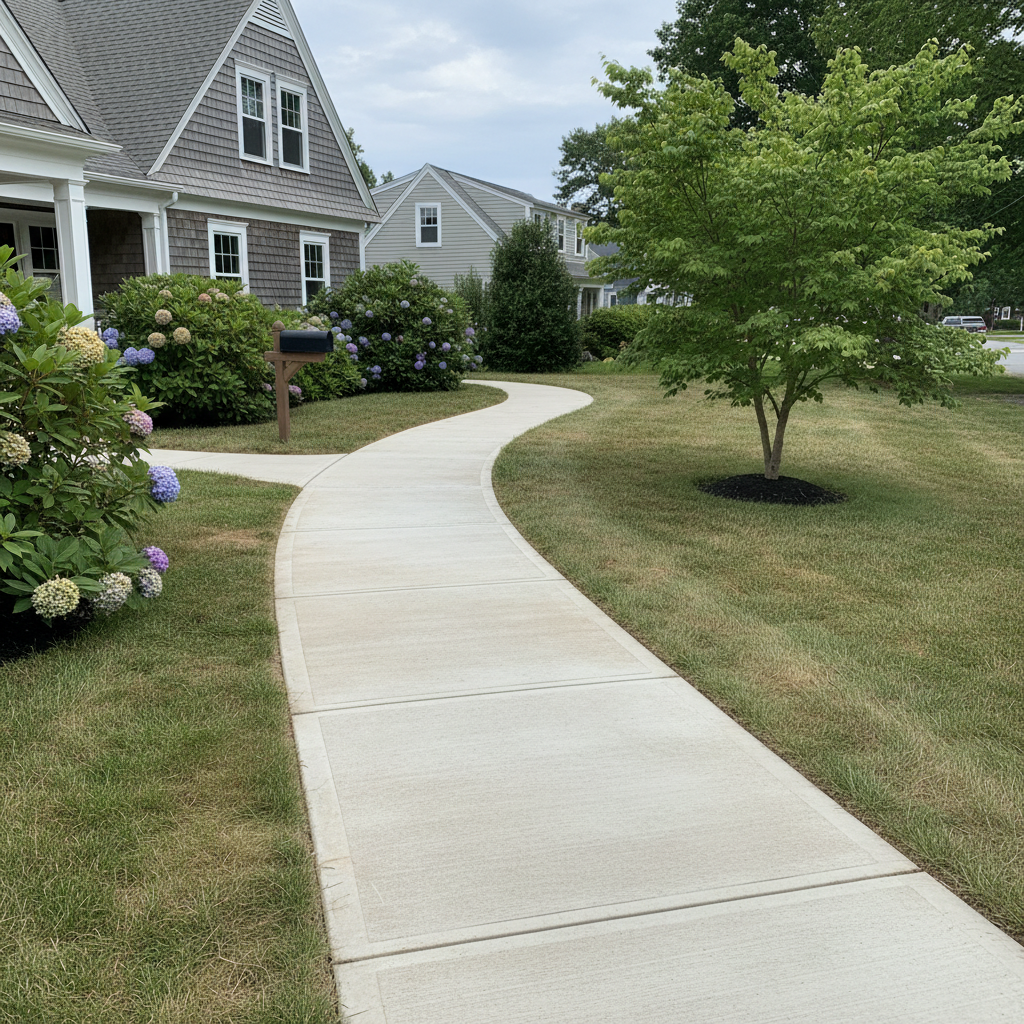
You've got concrete sidewalks, right? Maybe they're around your house, leading to the garage, or a path out back. You probably don't think about them much until there's a problem. But here in Warwick, with our crazy freeze-thaw cycles and salty winters, those sidewalks really take a beating. A little proactive care goes a long way, trust me. I've seen too many folks wait until a small crack turns into a major trip hazard, and nobody wants that.
Making Your Concrete Last Longer: It's Simpler Than You Think
When we pour a new sidewalk, we're using high-quality concrete, stuff designed to last. Even the best materials, though, need a little help. Think of it like your car – you wouldn't just drive it without oil changes, would you? Same idea here. The biggest thing you can do is seal your concrete. A good quality penetrating sealer, applied every 2-3 years, is your best friend. It repels water, which is huge for preventing those freeze-thaw issues we get around here. Water gets into the pores, freezes, expands, and then 'pop' – you've got spalling or a bigger crack. A sealer stops that cold.
Another big one? Drainage. You've got to make sure water isn't pooling on or near your sidewalk. If a downspout is dumping right onto the edge of your path, get an extender. Standing water, especially in winter, is a death sentence for concrete. We see this a lot in older neighborhoods like Gaspee Point, where properties are close to the water table and drainage can be tricky.
Regular Upkeep: Small Steps, Big Results
This isn't rocket science, folks. Most of what you need to do is pretty basic. Here's what I recommend:
- Clean it regularly: Sweep off dirt, leaves, and debris. Organic matter holds moisture, and that's bad news. A good power wash once a year can clear away grime, but be careful not to use too high a pressure setting, especially on older concrete.
- Deal with spills immediately: Oil, grease, chemicals – these can stain and even degrade concrete over time. Blot them up; don't just hose them around.
- Watch your de-icers: This is a big one for us in Rhode Island. Many de-icing salts, especially those containing ammonium sulfate or ammonium nitrate, are terrible for concrete. They cause chemical reactions that break down the surface. Stick to sand or de-icers labeled as 'concrete-safe' or calcium chloride based. Even then, use them sparingly. Once the ice is gone, sweep up the residue.
- Trim back foliage: Tree roots can wreak havoc on sidewalks, lifting and cracking them. Keep an eye on any trees or large shrubs planted too close.
Warning Signs: When to Pay Attention
Your sidewalk will tell you when it's hurting; you just need to know what to look for. Don't ignore these:
- Hairline cracks: A few tiny cracks aren't always a disaster, but if they start spreading or getting wider, it's a red flag. Water gets in there and expands, making them worse.
- Spalling or flaking: This is when the surface of the concrete starts to chip, peel, or flake off. It's often a sign of freeze-thaw damage or poor quality concrete from the start. Once it begins, it usually doesn't stop on its own.
- Uneven sections or trip hazards: If one slab is higher than another, or a section has sunk, that's not just an eyesore, it's a liability. Someone could trip and get hurt.
- Pitting: Small holes or craters forming on the surface. This can be from aggregate popping out or chemical damage.
- Discoloration: While some staining is normal, widespread, dark, or unusual discoloration could indicate water issues or chemical exposure.
When to Call a Professional: Don't DIY Everything
Look, I'm all for homeowners tackling projects, but some things are best left to the pros. If you're seeing any of those major warning signs – significant cracks, severe spalling, or uneven slabs creating trip hazards – it's time to call someone like us at Skyline Concrete Solutions. We can assess the damage and tell you if it's a repair job, like mudjacking to lift a sunken slab, or if a full replacement is needed.
Trying to patch a major crack yourself often just delays the inevitable and can sometimes make the problem worse. We've got the right tools, materials, and expertise to fix it right the first time, saving you headaches and money down the road. Plus, we understand the specific challenges our Rhode Island climate throws at concrete. Don't wait until someone takes a tumble or the damage is so extensive it costs you a fortune. A little prevention and timely intervention will keep your Warwick sidewalks safe and looking good for years.