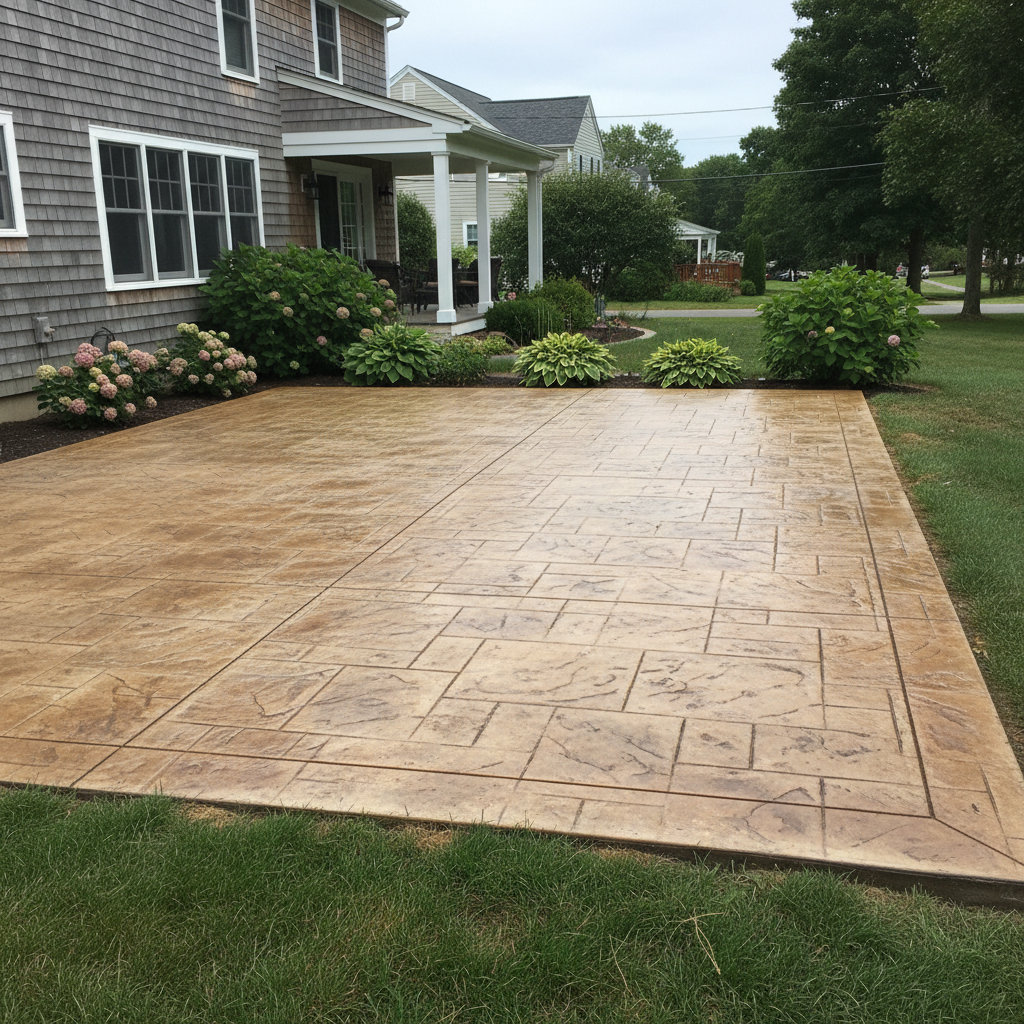
That new Stamped Concrete patio or walkway looks incredible right now, but keeping it that way takes a little bit of routine effort, especially around Warwick, RI where our weather loves to test every building material we own. Between the coastal dampness off Narragansett Bay and those relentless January freeze-thaw cycles, unmaintained decorative concrete can start showing its age fast. Skyline Concrete Solutions wants to help protect your investment and make sure it lasts for 15 to 20 years or more.
The Core Routine: Keeping It Clean and Sealed
Regular maintenance is not complicated, but consistency matters. You should sweep your Stamped Concrete surfaces regularly to keep leaves, dirt, and organic matter from settling into the textured grooves. Left alone, wet leaves will stain the color hardener, especially on lighter slate or ashlar patterns.
Wash the surface down with a gentle garden hose and a mild, pH-neutral soap once or twice a season. Skip the harsh chemical cleaners and heavy chemical acid washes unless you are prepping for a complete reseal. Speaking of sealing, this is a very important maintenance task for Rhode Island properties. You need to get your Stamped Concrete resealed every two to three years. Skyline Concrete Solutions always tells homeowners that a good sealer acts as a shield against moisture penetration, UV fading, and road salt tracking.
Winter Weather Defense
When the snow starts piling up across Kent County, your maintenance habits need to shift. Do not use rock salt or harsh chemical de-icers on Stamped Concrete. Those chemicals break down the acrylic sealer and pit the paste surface beneath, ruining the intricate texture. Opt for plain sand or safe alternative ice melts if traction is an absolute must.
Equally important is your choice of snow removal tool. Ditch the metal shovels completely. A sharp metal edge will easily chip high points in your slate or cobblestone pattern, exposing raw grey concrete underneath. Stick to plastic shovels or a rubber-edged snow pusher to clear walkways without leaving battle scars.
Warning Signs You Should Not Ignore
Keep your eyes open for early trouble spots so you can tackle them before they turn into costly repairs. If you notice the surface color looking dull, patchy, or whitish—a process called efflorescence, that white powdery substance where trapped moisture brings salts to the surface—your sealer has worn thin. Flaking or scaling on the top layer usually means water managed to sneak past the barrier before a freeze hit.
Hairline cracks can happen as the ground shifts through seasonal changes, but if a crack starts widening or uneven settling creates a tripping hazard, you are looking at sub-base movement.
When to Call a Professional
Some tasks are fine for a Saturday morning DIY workflow, but others require professional intervention. If your Stamped Concrete has widespread scaling, deep structural cracking, or severe color loss from improper chemical exposure, give Skyline Concrete Solutions a call. Skyline Concrete Solutions can evaluate whether a professional strip-and-reseal can save the look or if surface resurfacing is required to get your hardscape back in top shape.